From December 19 to 21, the 2025 People's Good Doctors Conference was held in Beijing. Hosted by health.people.cn, the event adopted the theme "Building Momentum, Driving Smart Innovation, and Promoting Integration," and focused on key challenges in healthcare innovation. It brought together a wide range of stakeholders, including members of the Chinese Academy of Sciences and the Chinese Academy of Engineering, experts in traditional Chinese medicine (TCM), hospital administrators, local public health officials, and representatives from the broader health and wellness industry. By showcasing key achievements and fostering in-depth dialogue and collaboration, the conference explored new pathways and provided fresh momentum for the high-quality development of the healthcare sector. Professor Wu Jian, Dean of the School of Healthcare Management at Tsinghua University, attended the conference as an invited guest. At a roundtable titled "Symbiosis of Medical Humanities and Artificial Intelligence," he shared key insights into the development of a new healthcare ecosystem.
Dean Wu pointed out that healthcare institutions seeking to integrate AI with medical humanities must remain grounded in the core principles of people-centered care and respect for life. He emphasized that these principles are not only fundamental guidelines but also essential prerequisites for the responsible use of AI technologies in healthcare in compliance with regulations. Only by adhering to them can AI truly improve medical quality and protect patient health.
To ensure the standardized and systematic deployment of AI in the healthcare sector, Dean Wu proposed an innovative three-tier management system: (i) Expert Committee on AI Ethics and Strategy: This body would be responsible for reviewing AI applications prior to their introduction into clinical practice and overseeing their appropriate use thereafter. By evaluating medical AI projects through both ethical and strategic lenses, the committee would ensure that new technologies are aligned with the core principles of medicine and safeguard patient rights and medical safety. (ii) Dedicated AI Quality Control Roles: These roles should be established within functional departments such as Information Technology or Medical Administration to support full-lifecycle management and accountability. By overseeing medical AI applications from development through deployment and operation, they can identify and address issues in a timely manner, thereby ensuring the stability and reliability of AI technologies. (iii) Central Role of Medical Personnel in Clinical Decision-Making: AI should be clearly defined as a supportive tool. While AI provides powerful support for diagnosis and treatment, it cannot replace the professional judgment of medical personnel. Medical personnel must remain at the center of clinical decision-making, with AI acting as an "assistant" to enhance diagnostic efficiency and accuracy.
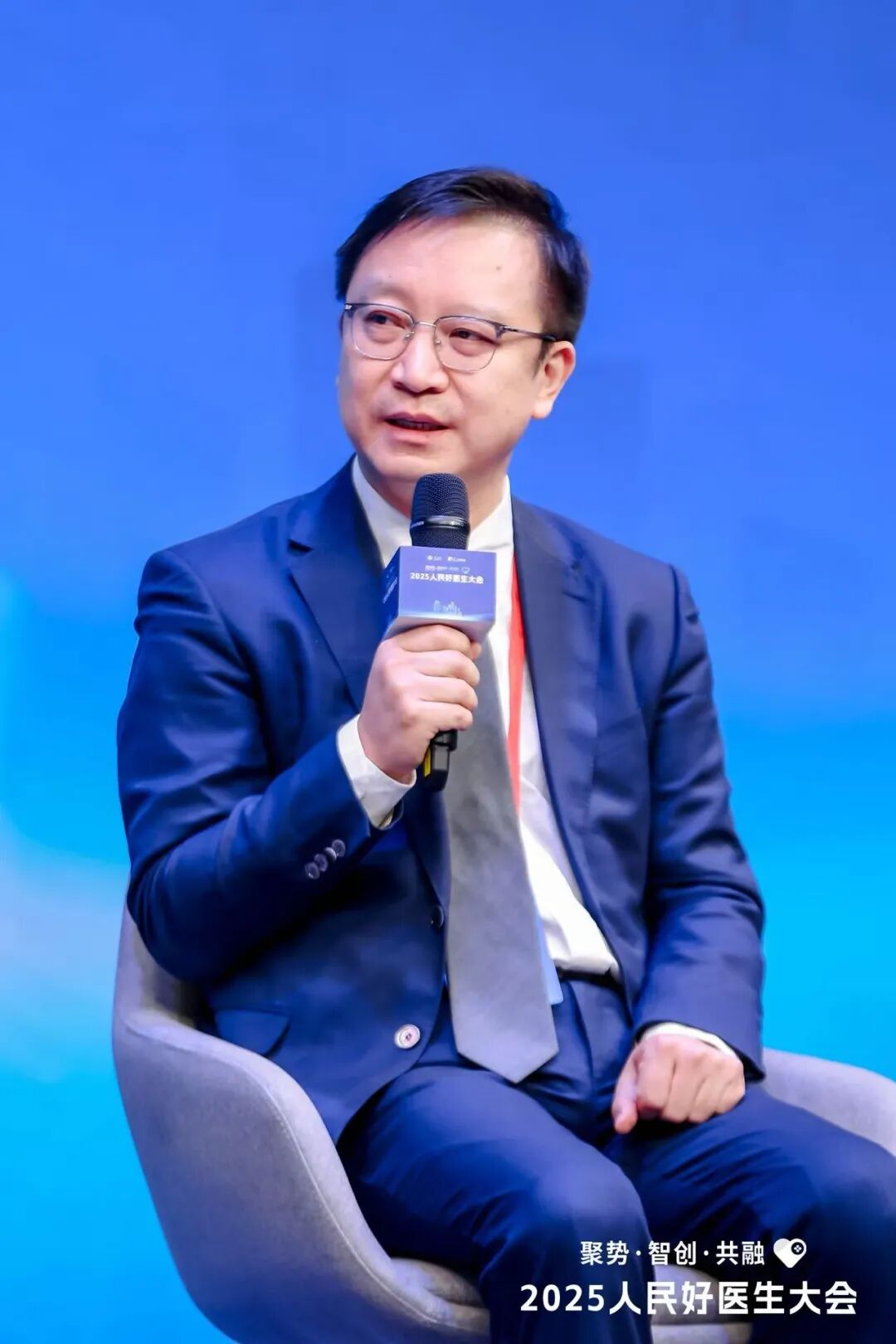
To address data limitations in medical AI, Dean Wu proposes moving beyond a purely physiological focus and incorporating multidimensional information, such as patients' social backgrounds and psychological states. He also emphasizes the need to shift medical intervention upstream toward population-level, life-course approaches to managing disease. By leveraging AI, healthcare providers can build a proactive, human-machine collaborative model that enhances the foresight, precision, and compassion of medical services, thereby shifting the paradigm from passive disease treatment to proactive health safeguarding.
Other key activities at the 2025 People's Good Doctors Conference included the release of the "Corpus of Core Social Values: Directory of the People's Good Doctors," the launch of the "People's Health Community+" platform and the People's Good Doctors Family Healthcare Service, and a roundtable discussion on innovation-driven pathways for public hospital development. Dean Wu outlined a roadmap for innovation in the healthcare sector that is both theoretically grounded and practically feasible, reflecting the School of Healthcare Management's commitment to advancing high-quality development of the sector. Moving forward, the School of Healthcare Management will continue to build on its academic strengths to explore the integration of AI and healthcare, with the goal of improving the quality of health management across the population.