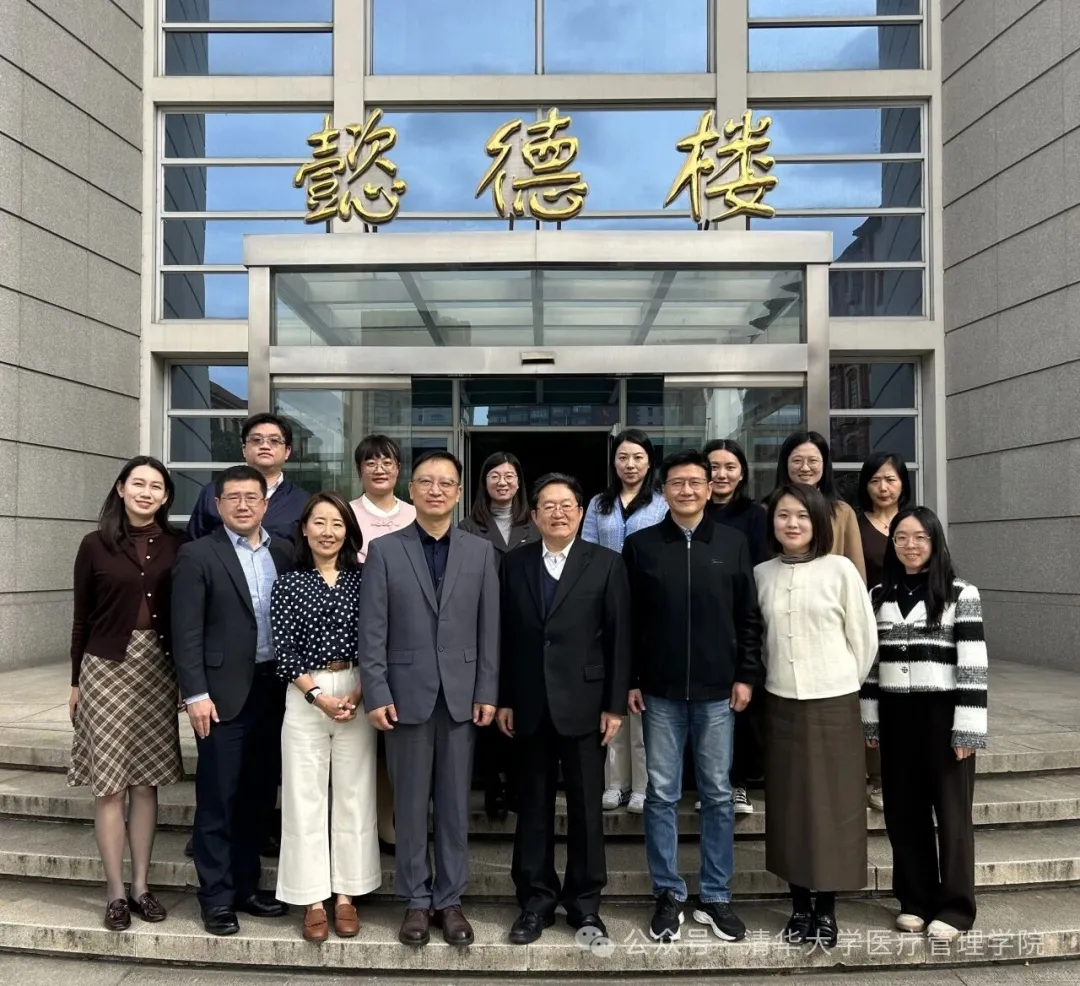
On November 3, a faculty delegation led by Professor Wu Jian, Dean of the School of Healthcare Management at Tsinghua University , visited the China Hospital Development Institute at Shanghai Jiao Tong University (SJTU), marking the first stop on the School’s Yangtze River Delta Study Tour. The delegation was welcomed by Xu Shuqiang, Professor and holder of an endowed chair at SJTU, Deputy Director of the SJTU University Council , and Director of the China Hospital Development Institute, together with Huang Rong, Executive Deputy Director of the China Hospital Development Institute and other faculty members of the institute. The two sides subsequently held a symposium.
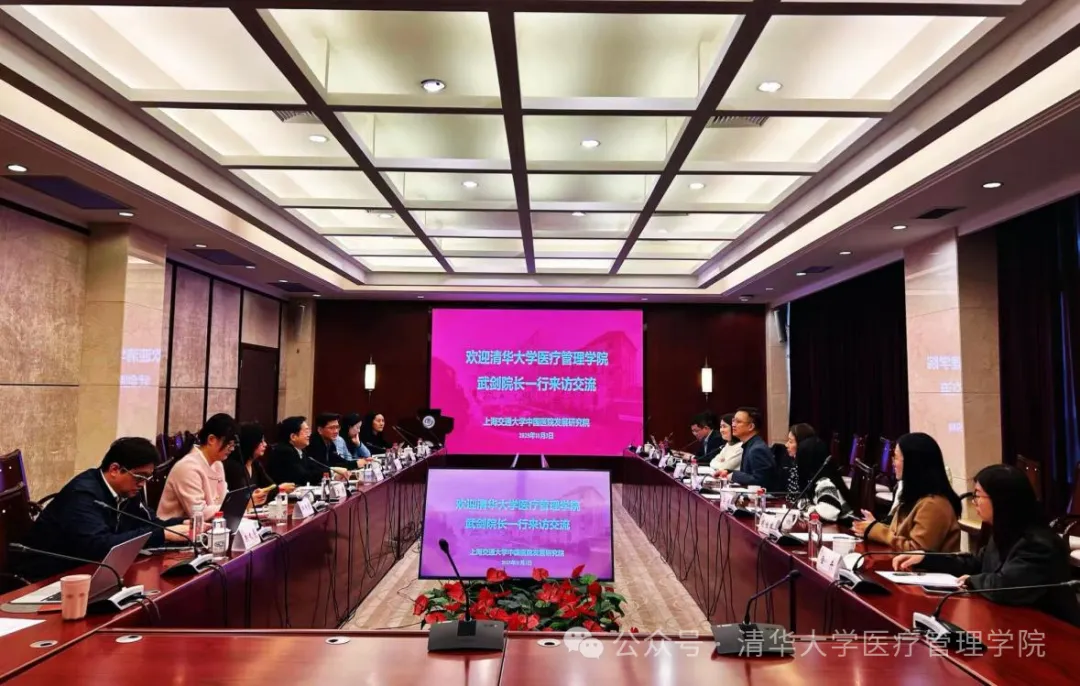
During the symposium, Dean Wu Jian presented the practical achievements of the School of Healthcare Management in discipline development, scientific research, and talent cultivation, and shared the School’s perspectives on these topics. He stated that the primary objective of the visit was to learn from the best practices of peer institutions in China and jointly explore new theories and pathways for advancing the discipline of healthcare management. During the exchange, the two sides engaged in in-depth discussions on key issues, including healthcare system reform, the high-quality development of public hospitals, the establishment of modern hospital management systems, mechanisms for cultivating interdisciplinary talent, and collaborative innovation of research platforms. These discussions spanned the full spectrum of the field, ranging from macro-level policy guidance and meso-level institutional design to micro-level implementation. In his concluding remarks, Director Xu Shuqiang emphasized that talent cultivation should be firmly grounded in China’s national context, with the aim of nurturing practice-oriented professionals committed to serving the people’s health needs. Furthermore, he stressed that research should focus on the most pressing issues in Chinese hospital reform and management, and integrate forward-looking vision, strategic thinking, and practicality, with the aim of providing theoretical and methodological support for the development of modern hospitals with Chinese characteristics.
This exchange helped strengthen the friendship between the two institutions and build consensus across multiple dimensions, including talent cultivation, academic exchange, and collaborative research projects, laying a solid foundation for future cooperation.
Moving forward, the School of Healthcare Management will continue to deepen collaboration and exchange with leading domestic institutions, strengthen mutual learning, and work together with them to advance the Healthy China Initiative.